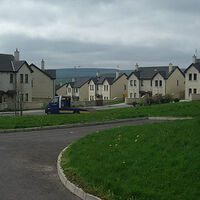


DUBLIN, Ireland: Inflation in Ireland's property market has begun to ease as more homes come on the market, though price growth still far outpaces the broader economy, according to a new Daft.ie report.
As of September 1, 11,925 second-hand homes were listed for sale nationwide, up 1 percent from a year earlier but still less than half the 2015–2019 average.
House price inflation was lowest in Dublin, where prices rose 4.5 percent in the past year. Price growth in Munster (five percent) and in the four other major cities (5.8 percent on average) also remained below the national rate. Larger increases in Leinster outside Dublin (7.2 percent) and in Connacht-Ulster outside Galway (8.7 percent on average) pushed up the national figure.
Nationally, average listed prices were 5.9 percent higher year-on-year in the third quarter, with a three-bedroom semi-detached home costing just over 421,000 euros. Prices are now 39 percent above pre-pandemic levels and only 10 percent below their Celtic Tiger-era peak. In Dublin, the average three-bedroom semi costs 557,000 euros, up four percent from a year earlier. Across the country, prices rose by 0.8 percent during the quarter.
Report author Prof Ronan Lyons of Trinity College said that supply shortages have dominated Ireland's housing market for much of the past two decades. More new construction and a stronger second-hand market, he added, are essential for long-term stability.
Lyons noted that since COVID-19, Dublin's prices have grown more slowly than elsewhere, thanks to a relatively strong pipeline of new homes. Higher interest rates have also cooled demand in the second-hand market, making new housing projects more critical.
The Daft.ie analysis combines transaction data from the Property Price Register with its own listings database, alongside measures of stock, market activity, and transactions.