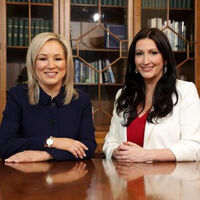


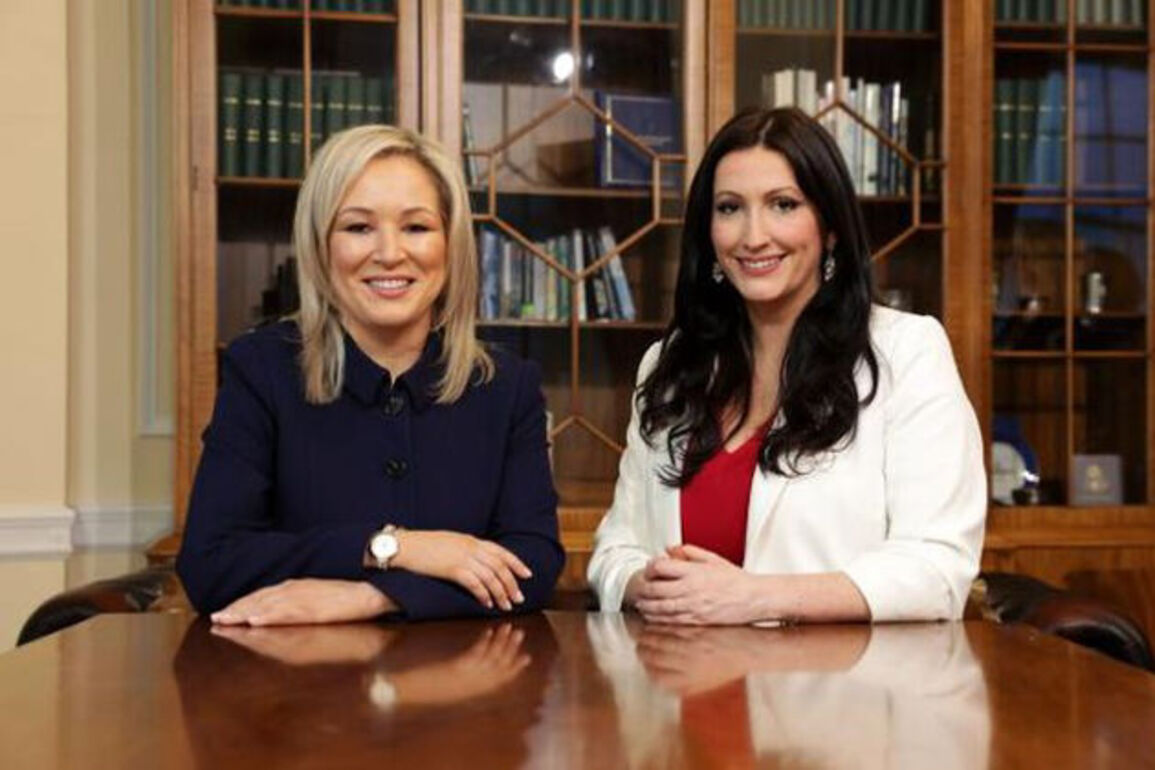
DUBLIN, Ireland: Extending voting rights in Irish presidential elections to people living in Northern Ireland would go too far, said Stormont's deputy First Minister, Emma Little-Pengelly, at a press conference here.
She said people must understand the difference between political reality and political aspiration, noting that the king is Northern Ireland's head of state.
Her comments came after Sinn Féin First Minister Michelle O'Neill said she disagreed. The two leaders shared their views at a press conference following the North-South Ministerial Council (NSMC) meeting in Dublin.
O'Neill said it was a "huge democratic gap" that she, as an Irish citizen, could run for president of Ireland but could not vote in the election because she lives in Northern Ireland.
Back in 2013, a constitutional convention in the Republic of Ireland recommended giving Irish citizens living abroad the right to vote in presidential elections. Such a change would require a referendum to amend Ireland's constitution.
A referendum was planned for 2019 but postponed due to the political uncertainty surrounding Brexit and discussions about the Irish border.
Sinn Féin has continued to urge the Irish government to move forward on the issue, but there has been no new commitment to hold the vote so far.
Speaking after the NSMC meeting, Little-Pengelly restated her opposition.
"In relation to presidential voting rights, Northern Ireland already has a head of state, and that reflects the political reality," she said. "We must not overstep and upset the balance of the Belfast/Good Friday Agreement. Northern Ireland remains fully part of the United Kingdom, and that principle must be respected."
O'Neill, however, took the opposite view.
"As an Irish citizen living in the north, I can stand for president but cannot vote in that election," she said. "That's a clear democratic problem that should be fixed quickly. We shouldn't have another presidential election where people in the north are left out."
Taoiseach Micheál Martin said that a lot of work would be needed before any change could happen.
"It would have to fit within the spirit of the Good Friday Agreement and respect equality between communities," he said. "But it would require a constitutional amendment, which is a major task."
Tánaiste Simon Harris said he agreed with Martin's comments.