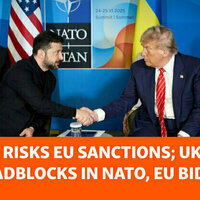


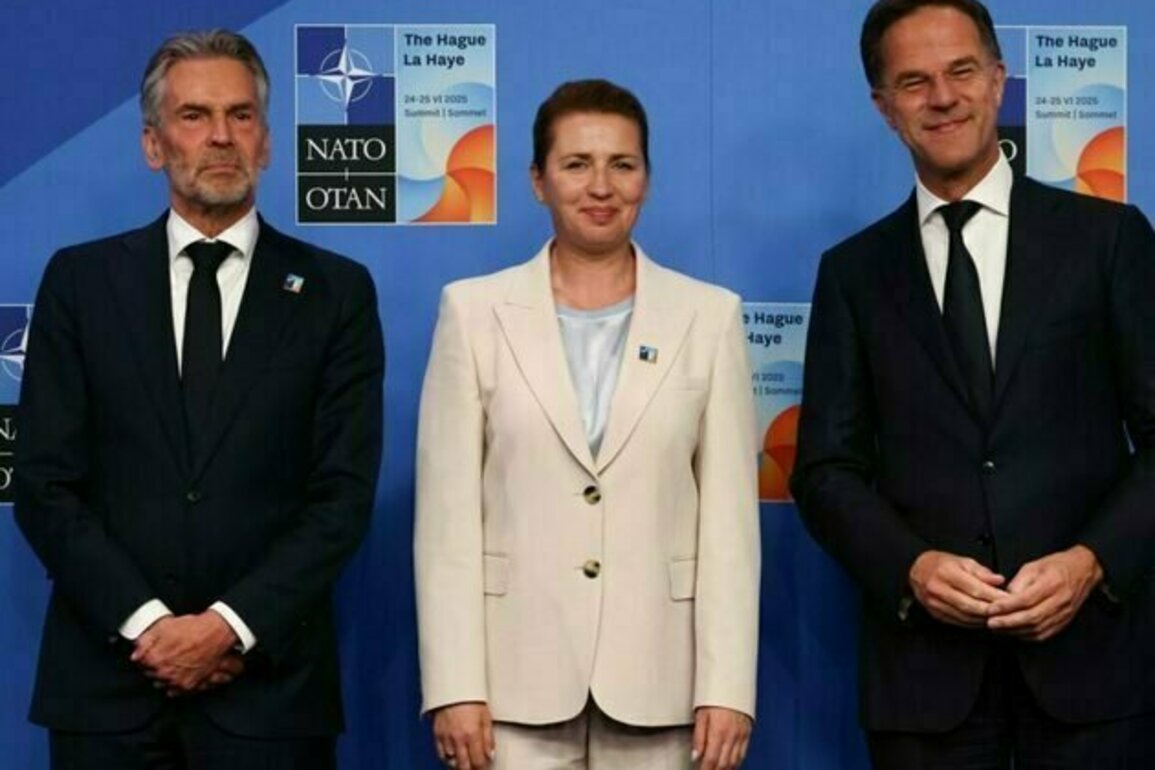
(CN) - U.S. President Donald Trump's claim of personal credit for pushing NATO allies to spend more on defense might hold some truth - but Russian President Vladimir Putin has also played an outsized role.
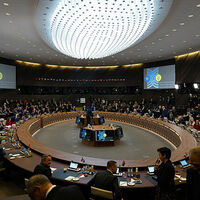
As NATO members agreed Wednesday to require a boost in defense spending, jumping from a long-held target of 2% to 5% of gross domestic product, experts and observers in Denmark credit the historic decision mostly to fears over Putin and his invasion of Ukraine, and partly to Trump's wobbly stance about the future of the U.S. in the alliance.
Trump's Greenland takeover rhetoric has only deepened doubts about whether a steadfast ally would stab friends in the back by invading a sovereign territory of Denmark, another NATO member.
U.S. security is one reason for Trump's interest. Greenland, the world's largest island, claims a large chunk of the Arctic region and lies along the shortest path for Russian missiles to the U.S.
Denmark has already admitted that its defense obligations around Greenland have not been good enough.
"All countries must reach 5% of GDP. That may sound like a lot. But it is necessary if we are to be able to defend ourselves. And have a real deterrent in the future," said Danish Prime Minister Mette Frederiksen on social media after NATO's historic agreement.
"I am proud that Denmark is investing massively in our common defense and is at the forefront of supporting Ukraine. We must continue to do so. And also, the Arctic has acquired a new global strategic importance," she said, adding that it is a priority that NATO and allies will "assume more responsibility."
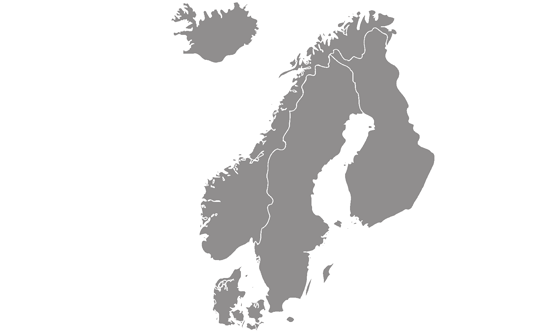
Frederiksen has been a strong supporter of NATO, demanding members increase defense budgets to a minimum of 5% of GDP - a target the Nordic country can realistically reach long before the year 2035, NATO members' self-imposed deadline.
On Monday, Minister of Finance Nicolai Wammen announced revised economic projections that mean his department will have an extra 58 billion Danish Kroner ($9.09 billion) in available funds to cover the spending hike without increasing taxes, economist Bo Sandemann Rasmussen told public broadcaster TV2.
Denmark, previously among mid-range spenders in NATO, is now mingling around the top of the list, after increasing its defense budget by 159% from 2012 to 2024, according to Statista.
Numbers from the past 10 years illustrate Denmark's quick switch in prioritizing funds to its defense. In 2015, just 1.11% of the Nordic country's GDP was allocated to defense. In 2023, Denmark for the first time reached NATO's then-goal of 2% before taking a rapid jump from 2.37% to 3.2% the past year alone. That's a fourfold increase since 2015.
"Russia's war on Ukraine, and the resulting shift in threat perceptions in Europe, remains the primary reason for rising defense spending, including in Denmark. However, the Trump administration's pressure on Europe, and on Denmark with regards to Greenland, further increases the drive to spend more on defense," said Niels Byrjalsen, a postdoctoral researcher at the Center for Military Studies at the University of Copenhagen.
While Denmark primarily increases spending only to strengthen its own defense, the recent rise also sends a message globally, the researcher said.
"Denmark specifically wants to demonstrate to the U.S. and other allies that it takes its role in the Arctic seriously. It is thus also likely that some of the new capabilities will be oriented toward security and defense in and around Greenland," he said.
On Wednesday, all branches of the Danish Armed Forces gathered for the first time ever in Greenland to launch their summerlong training on the Arctic island to patrol and defend Greenland's critical infrastructure.
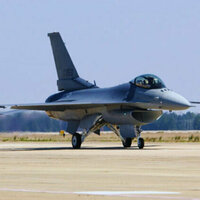
Three F-16 jets will deploy in Kangerlussuaq, Western Greenland, where they will fly regularly along the coastline, the air force said.
Despite the economic effort, Denmark's armed forces are still likely on a long journey to meet NATO standards. Just last year, Defense Minister Troels Lund Poulsen changed military leadership after a frigate couldn't launch its defense missile system due to a radar failure in combat with Houthi drones, leaving the crew defenseless for 30 minutes.
The episode followed several media reports exposing Danish barracks filled with mold, dysfunctional toilets and showers. Even with an economic boost, it will take time to get the Danish Armed Forces into top shape.
"The massive and fast increase in defense spending does matter to address gaps and problems. Yet, at the same time, it takes time to rebuild and also develop new capabilities - both because of production time and the huge international demand on major platforms, because it requires a lot of people to carry out all the new tasks, including training, maintenance, development, etc.," Byrjalsen said.
Source: Courthouse News Service