

The high mortality rate in Australian prisons is alarming as shown by more progressive nations, it doesn't have to be.Gerry Georgatosreports.
HOW MUCH LONGER will Australia pretend its prison population has rights? As a social justice academic and former PhD law researcher intodeathsin custody andprison reform, I argue, to this day, that nowhere near enough has changed.
Since the tabling of theRoyal Commission into Aboriginal Deaths in Custody Reportin 1992, not enough has been done to reduce or end non-natural deaths in prison custody.
High mortality rates in Australian prisons
Three decades on, there are still about100deaths in Australian prisons annually, which include at least20deaths in prison custody of First Nations people.
Though death rates seem higher for Australians not of First Nations heritage, when we disaggregate non-natural death rates and natural death rates, we find thatFirst Nationspeople die at a much higher rate fromnon-naturalcauses. Disaggregating further, we find that they die bysuicideat an even higher rate.
First Nations peoples in prisons alsodiemuch younger, and their average and median ages of death are more than ten years younger than the rest of those incarcerated.
If you die in an Australian prison aged 19, you were likely a Blackyouthmore than 90% of prison deaths at that age are comprised of Black 19-year-olds. These are youth, who, from the beginning of life never stood a chance, being born into overwhelming unfairness anddisadvantage. If you die in an Australian prison aged 20, you were likely a Black youth 85% of deaths in this age group areBlack.
No one should be dying in prison of unnatural deaths, but they do and at appallingrates. Little-known are the horrific death rates of both First Nations and non-Indigenous prisoners. For First Nations people in the first year post-release, the death rateis at least four times higher than thatof non-Indigenous prisoners. Nearly all deaths within the first year after releaseare non-natural deaths.
Here stands my long-held premise that peopleleavingprison in general come out in worsestatesthan prior to incarceration.
Tragically, thedeath ratesafter custody, in the first year, are nearly ten-times more for First Peoples. Suicide in that first-year post-release is the leading cause of death and the suicides are increasing.
Australia's prison system killed Cleveland DoddThe fate of Cleveland Dodd was determined by a cruel incarceration system that is designed to punish instead of reform.
Lack of legal protection for prisoners
There will be many who argue that prisoner rights do exist in Australia, though they are not enshrined in a single constitutionaldocumentlike in other countries. Instead, prisoners are arguably protected through a combination of statutory law, common law and international obligations.
I am calling these paper-thin rights BS. They barely exist, and in effect where they may exist, they are regularly suspended.Solitaryconfinement, indefinite confinements, three-pointshackling, rollinglockdowns, overcrowded cells, stir-crazy, grotesque cells, substandardhealthcareand high rates of non-natural death rates counterclaim a lack of immutable rights and protections.
Countries with stronger prisoner rights and positive outcomes
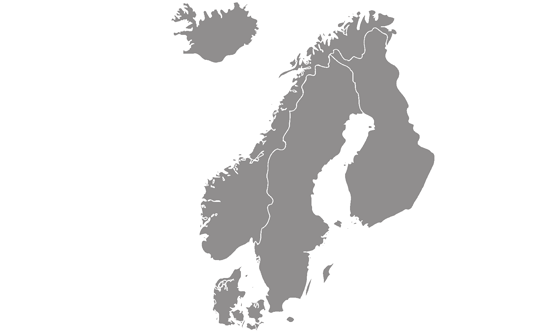
Prisons are the only places in Australia where there is zeroMedicare, and therefore, healthcare isabysmal. Prisoners have no rights, no access to external notification services. Prisoners' lives do not matter. Prisons in Australia are purely carceral, unlike the Nordic and Dutch nations, where prisons have been reformed to become life-transformative, genuinely rehabilitative, specialist therapeutic, restorative and educational.
NorwayRehabilitationmeans punishment is the restriction of liberty and nothing more, shown by:
- open prisons (like Basty Island) featurenormalliving conditions, education, job training and autonomy;
- recidivismrateof less 20% (one of thelowestin the world);
- normalised environments that reduce trauma;
- focus on skills and therapy prepares inmates for authenticreintegration; and
- guards are more like social workers.
Prisonerdignityisprotectedunder theBasic Law for the Federal Republic of Germany, including:
- emphasis onresocialisation;
- recidivism rate of around 35% (lower than many Western countries);
- family visits, personal privacy;
- inmates can wear their ownclothesand cook their own meals; and
- extensive vocational and educationalprograms; mandatoryeducationfor the illiterate.
Progressive policies such as usingalternative sentencing(e.g community service) have yielded positive results, including:
- focus on mental health and specialist addiction treatments;
- closed prisons due to declining incarceration rates, 23 prisons have closed; and
- dropping recidivism and prison population.
Imprisonment and punishment do not lead to more harmonious and prosperous societies, writes Gerry Georgatos.
Examples of reforms that haveworked:
Norway: Normality principle"- Prison life should resembleoutside lifeas much as possible;
- guards receive three-year training with focus on conflict resolution; and
- prisoners have freedom of movement, cook for themselves and attend classes.
- Since the 1970s, reduced prison population by 60%;
- focus on early release, probation and community-basedsanctions; and
- crimes like petty theft anddruguse often result in non-custodial sentences.
- Most prisoners work (e.g. in carpentry, printing), earning modestwages;
- funds used for restitution, savings and basic needs; and
- mandatoryeducationfor illiterate or undereducated prisoners.
- Specialised courts for drug offenders, mental illness andyouth;
- courts work with social services, not just police; and
rehabilitationplans replace standard sentencing for eligible cases.
The need for legislation to protect prisoners
There must be prisoner rights enshrined inlawand until then, we are a nation not only a laggard but obscenely discriminative. The only recommendation not accepted by the Australian Senate from the 339 recommendations of theRoyal Commission into Aboriginal Deaths in Custody Reportwas Recommendation 329.
Recommendation 329calls for a National Standards Body to draft and introduce legislation embodying Standard Guidelines and incorporate prisoner rights. It was not approved by theNorthern Territoryand hence the Australian Senate did not endorse Recommendation 329.
Had Recommendation 329 been endorsed, the creation of warrantedlegislationcould have ensured prisonerrightswere the equivalent of all Australians and prisoners were protected in well-resourced and therefore humane and safer custodialsettings. Recommendation 329 was one of the few recommendations, which explicitly required thecraftingof legislation to arise, ensure and preserve universal rights for prisoners that are not suspended while incarcerated.
Gerry Georgatosis a suicide prevention and poverty researcher with an experiential focus on social justice.