

A cycling network expanded from 70 kilometres to over 400 kilometres in Fortaleza, Brazil. A project to create a bike lane in every street of Paris. And the longest pedestrian and cycle tunnel in the world, in the Norwegian coastal city of Bergen.
These are the exact sort of urban initiatives which the UN Global Road Safety Week kicking off on Monday aims to celebrate and promote.
First established in 2007, this years week is dedicated to the theme Make walking and cycling safe.
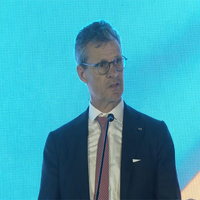
Walking and cycling should be the most ordinary, and therefore, the safest mode of transport, saidDr. Etienne Krug, who chairs the group known as the and directs the World Health Organizations efforts to tackle social and economic conditions which impact human health.
Stats tell a story
In September 2020, the UN General Assembly passed a resolution which established the Decade of Action for Road Safety 2021-2030 and set a goal to reduce road traffic deaths by at least 50 percent by the end of the decade.
While progress has been made,WHOsays that more action is needed across all policy sectors.
Each year, 1.2 million people are killed in road traffic incidents, with pedestrians and cyclists accounting for over one-quarter of these deaths. These deaths are not distributed equally around the world. Rather, 90 per cent of road traffic deaths occur in low- and middle-income countries.
Moreover, the UN estimates that at least 90 per cent of the worlds roads do not meet pedestrian safety standards andonly 0.2 per cent of roads have dedicated cycle lanes, leaving pedestrians and bikers dangerously exposed.
A holistic approach
Improving pedestrian and cyclist safety has far-reaching benefits for communities, in terms of health, economic and environmental outcomes.
Walking and cycling improve health and make cities more sustainable.Every step and every ride [helps] to cut congestion, air pollution and disease, saidDr Tedros Adhanom Ghebreyesus,WHODirector-General.
Take, for example, Fortaleza in Brazil - the five-fold expansion of their cycling network led to a 109 per cent increase in pedestrian activity and made children twice as likely to play outside in the areas that were redesigned.
In Norway, the Fyllingsdalstunnelen tunnel which is decorated with murals and protected by security cameras works to reduce carbon emissions and encourage walking and cycling.
To support the continuation of improvements like these during UN Road Safety Week, WHO has provided policy-makers with atoolkitoutlining tangible initiatives which include integrating walking and cycling initiatives into other policy sectors and building more extensive infrastructure for pedestrians and cyclists.
We need [to] and we can do better, Dr Krug said.
Mtur/Jade QueirozFortaleza, Brazil.Mtur/Jade QueirozFortaleza, Brazil.