


For over 15 years, Iceland has been hailed as a global leader in gender equality. Yet, according to the latest report from the Icelandic police, domestic violence cases have surged by nearly 40% over the past decade. How does a country celebrated for its progress on womens rights grapple with such a stark contradiction? ENTR traveled to Reykjavik to find out.
Its 4 p.m., and Aleksandra is picking up the keys to the shelter. She will be managing the house for the evening and the night ahead. The 33-year-old has been working for almost a year at Kvennaathvarfi, a womens shelter inReykjavikthat has provided refuge for survivors of domestic violence since 1982.
This place was already a big part of my life because I lived here as a child with my mother and siblings. I always knew I wanted to work in this field and help women rebuild their lives.
Meeting women where they are
Each year, around 100 women find safety at the shelter, staying as long as they need. Funded by the Icelandic government and private donations, the center offers more than just a secure place to staywomen continue to receive support even after they leave.
According to the shelters 2023 report, 24% of residents were able to move into new housing or stay with relatives after their stay. However, 14% returned to live with their abusive partner.
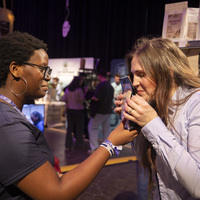
The idea is to meet women where they are. Sometimes that just means being a friendly face. Other times, its about talking with them, supporting them, says Aleksandra as she sets the table for dinner. Residents trickle into the dining room, some keeping to themselves, while two women cradle babies in their arms.
Between running the evening activities, Aleksandra also manages the centers emergency helpline. Her trained gaze moves between the drawers where utensils are kept and the security camera screens monitoring the buildings exterior.
The very existence of this shelter is proof that Iceland still falls short when it comes to womens rights. Women here are still afraid to speak up because they fear how society will react, Aleksandra explains. Some are still ostracized by their entire village for daring to say they were raped. Were always ready to believe that our sister could be assaultedbut not that our brother could be a rapist.
Fifty years after a landmark protest
Despite these challenges, Iceland has consistently topped the World Economic ForumsGlobal Gender Gap Reportfor more than 15 years. The index evaluates economic, social, and political indicators, and Iceland ranks among the best in many of them.
In 2018, the country became the first in the world to mandate equal pay in the workplace and introduce shared parental leave between mothers and fathers. It was also the first European nation to legally define rape based on consent.
These advances are largely the legacy of a historic movement that took place 50 years ago. On October 24, 1975, 90% of Icelandic women went on strike, demanding more rights. The mass protest resulted in major gains, including the right to abortion. Today, this demonstration still resonates with many Icelandic women.
I feel like movements like MeToo really shook the country. Here, you dont need a massive mobilization for the message to spread, says singer Hildur. The 37-year-old uses her music and platform to raise awareness of womens rights. One of the advantages of living in a small society is that it doesnt take long to be heard.
A Nordic paradox?
In 2018, a study revealed that one in four Icelandic women reported being raped or sexually assaulted - far higher than the European average of one in ten at the time. The statistics sparked outrage both within the country and internationally.
This contradiction - where nations with strong gender equality records also report high rates of gender-based violence - is often referred to as the Nordic paradox. But Rannveig Sigurvinsdttir, an associate professor of psychology at the University of Reykjavik, cautions against interpreting the data at face value.
Violence statistics dont just reflect how often it happens. They also indicate how willing people are to talk about it, she explains. In some ways, a higher rate can be a good sign - it means people feel more comfortable speaking up.
She also points out that different research methods yield different results. If you ask, Are you currently in a violent relationship that you want to leave? the number of respondents in such situations is actually lower than in other societies with strong gender equality.
Across Europe, the figures are shifting as well.The most recent 2024 studyon gender-based violence found that one in three women had experienced abuse.
Despite Icelands reputation as a womens paradise, the reality on the ground tells a different story. But if the numbers show anything, its that more and more women are finding the courage to speak outsomething that gives Hildur hope. I just hope that every case of domestic violence we hear about slowly opens peoples eyes.
Originally published on France24